
#PEOPLE · LinkedIn original
I once had a football coach named Jürgen—not Klopp, but good nevertheless.
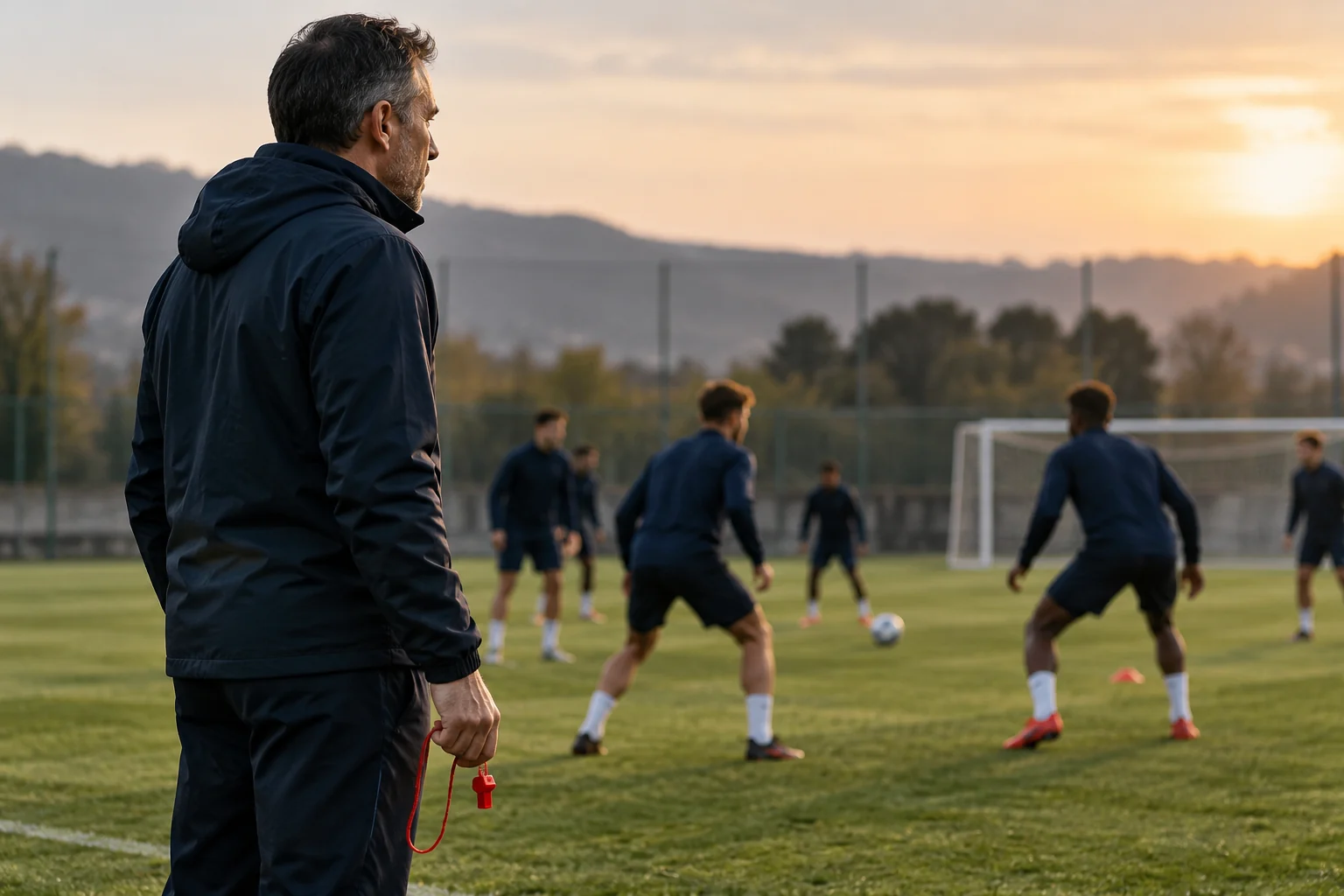
I once had a football coach named Jürgen—not Klopp, but good nevertheless. I still remember the first few minutes after the referee blew the whistle. In some matches, it took only one or two minutes before Jürgen shouted loudly and almost furiously onto the pitch: “B-O-D-Y T-E-N-S-I-O-N!!!” Then we all knew what he meant. Sometimes that early wake-up call alone was enough to influence the match positively in our favour. What had happened? And what was this “body tension” about?
It was about attitude and the will to succeed, already clearly visible—or absent—in some key players’ body language after just a few minutes. Jürgen called it:
Body tension
Indeed, after many years, now mostly watching team sports from the spectator’s perspective, I can see within minutes which team has the right attitude and really wants to win. Do you recognise this? Sporting experience shows that a lack of body tension does not distinguish bad teams from good ones. It affects all teams alike. Particularly successful teams accustomed to winning can suffer a surprising defeat as league leaders against the bottom side in their next match. Otto Rehagel, a legendary German football coach, is said to have remarked: “The truth is on the pitch!”
It is exactly the same in everyday organisational change. The truth is on the pitch here too, and willingness to change can be read in the body tension of those playing on the field of strategic change projects.
Recently, I facilitated a leadership workshop for a client. The executive team of a market leader was very worried about supposedly smaller competitors increasingly taking market share. A workshop was convened with all key leaders. Cognitively, everyone agreed that competitiveness was at risk despite extremely successful recent years: “We are twenty to thirty per cent more expensive than competitors, too cumbersome, too slow at implementing innovative solutions, insufficiently customer-focused, heavily occupied with ourselves and too focused on the few existing customers who currently account for more than eighty per cent of our business.”
Changes were needed and quickly identified: accelerate innovation projects, win back a handful of customers with aggressive pricing, and add a few quick wins. Those were the agreed workshop outcomes in brief. As in a team talk just before kick-off, the tactics for the coming weeks and months were discussed and clearly agreed.
Then we went out onto the pitch!
A few weeks later, roughly halfway through implementing the agreed short-term measures, we met again for half-time tea. Together, we reviewed implementation progress. Soberly, we realised that everyday life had taken over again: operations had struck back, with important client meetings here, worsening productivity problems at production site X there, and in any case: CORONAVIRUS!
Everyone, including the executive team, fully understood the lengthy chorus of excuses explaining why the first half had been lost!
That reminded me of Jürgen, his wake-up call after the opening minutes and BODY TENSION! Afterwards, I shared the story with the managing directors, and we agreed: as the coach of a leadership team, lamenting missed opportunities over half-time tea is not enough. As a leader, you must be present, watch from the touchline and intervene appropriately when necessary, because:
The truth is on the pitch in everyday leadership too!
Only then do you have a chance to see the body tension with your own eyes in the first few minutes. I am not saying managing directors and leaders should shout onto the pitch from outside as Jürgen once did. But appropriate feedback and articulating clear expectations are basic leadership skills. Jürgen even substituted me once because my body tension remained absent!
And how is the body tension in your leadership team?
Artikel teilen↗
What does this mean for your organisation?
Let’s explore your specific challenge together.
Let’s talk↗