Why leadership teams should take regular pit stops
“I simply have no time to look for a better job. I have nothing but meetings, but they’re fun!” That is the message of the advertising campaign “Indeed instead of excuses”. I think the idea is excellent!
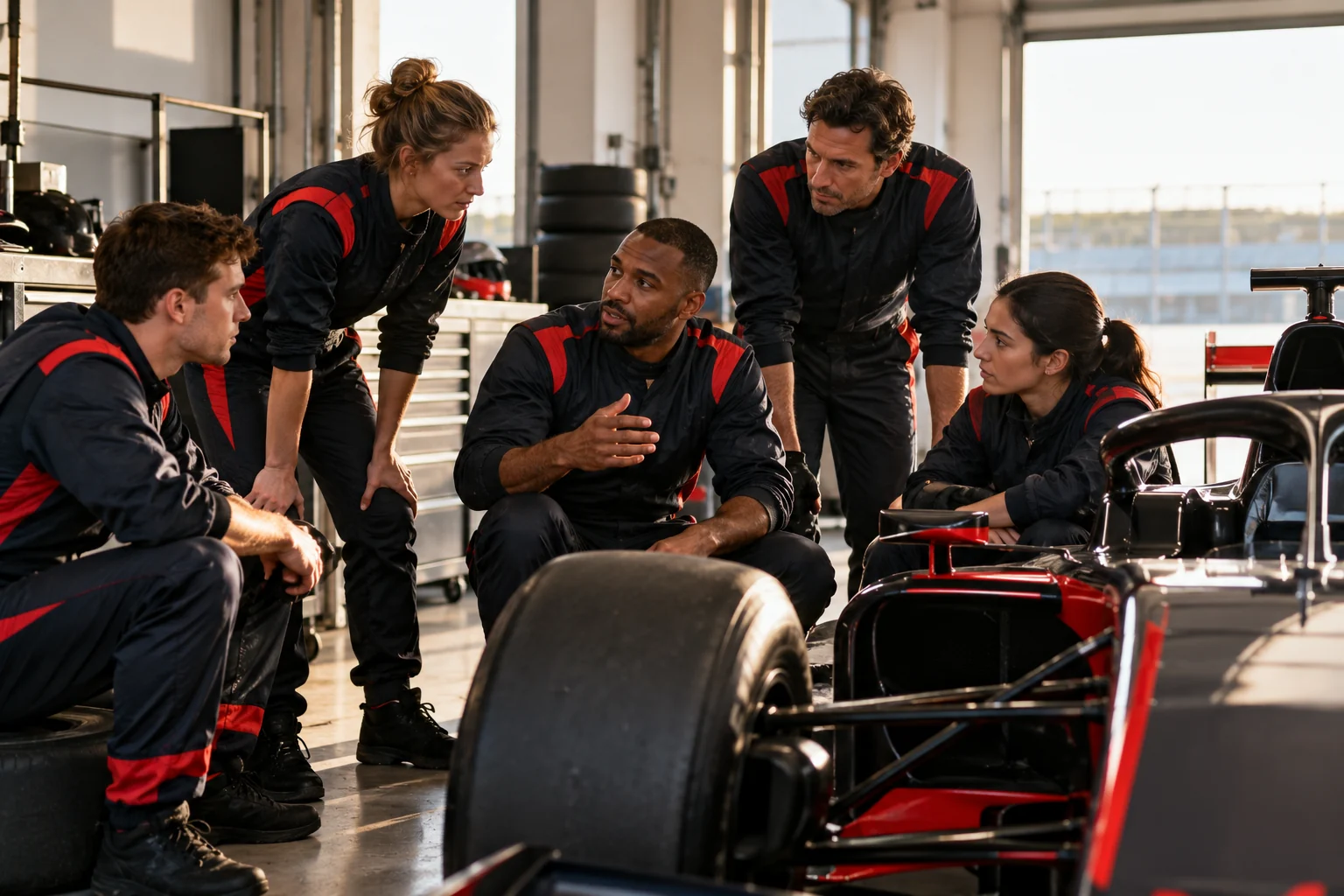
Does that sound familiar? I mean not the campaign, but the many meetings that, if we are honest, serve as excuses for everything we fail to do. As a consultant, I have the advantage of seeing these situations from outside. A look at clients’ calendars often reveals a working day spent rushing from meeting to meeting. It sometimes resembles an endless Formula One race, but without a pit stop: without a break.
Meetings are not pit stops
Meetings happen at top speed and topics change so rapidly that watching makes you dizzy. Yet every Formula One team knows you can only win a race with intelligently planned pit stops. You cannot win with an empty tank and worn-out tyres!
Pit stops for leadership teams
Regular pit stops matter individually and are indispensable for leadership teams. Without regularly reflecting on how the team works together, problems risk being swept under the carpet, trust can erode and leadership effectiveness ultimately suffers. Patrick Lencioni’s “The Five Dysfunctions of a Team” springs to mind!
When did you last make time for a break to refuel and change your “tyres”? A deliberate pit stop can work wonders for performance and help you finish the race successfully.
(👉🏼 One more thing: Activate the 🔔 bell 🔔 on my LinkedIn profile so you will see my posts in future. → DO IT!)
Artikel teilen↗
What does this mean for your organisation?
Let’s explore your specific challenge together.
Let’s talk↗