Four skills for successful online workshops
For more than eighteen months, the coronavirus pandemic has more or less confined us to the online world. We long for “real human encounters”. At the moment, it looks as if working life over the winter will require us to retreat further into the online world, rather than less. The first major companies in Germany have already reintroduced mandatory home working.
Whether we like it or not, professionalism also means facing realities. I have three school-age children and know many parents who complain about the lack of digital competence in our schools. But how is digital competence looking on our own doorstep when it comes to online meetings and workshops?
In my view, more is needed than letting MS Teams or Zoom run for hours over a hopefully stable internet connection. I count four areas of professional online meeting and workshop competence:
1. The foundation: facilitation skills
What has long applied offline also applies online. No meeting, and certainly no workshop, should take place without a professional facilitator who knows their craft. That includes not just facilitation techniques, but above all a good sense of social interaction and the mood in collaborative work.
2. Video conferencing skills
After almost two years, we may expect a professional online facilitator to handle standard video conferencing tools such as MS Teams, Zoom, WebEx and others confidently, master opening and closing breakout rooms, and above all avoid spending the meeting’s first fifteen to thirty minutes establishing a stable technical setup.
3. Complementary online collaboration tool skills
Flipcharts, pinboards, workshop cards and sticky notes have become digital collaboration tools online, such as Miro, Mural or simply the MS Teams whiteboard. Professional online facilitators have learned to master them technically and use them appropriately for each situation.
4. Technical infrastructure competence
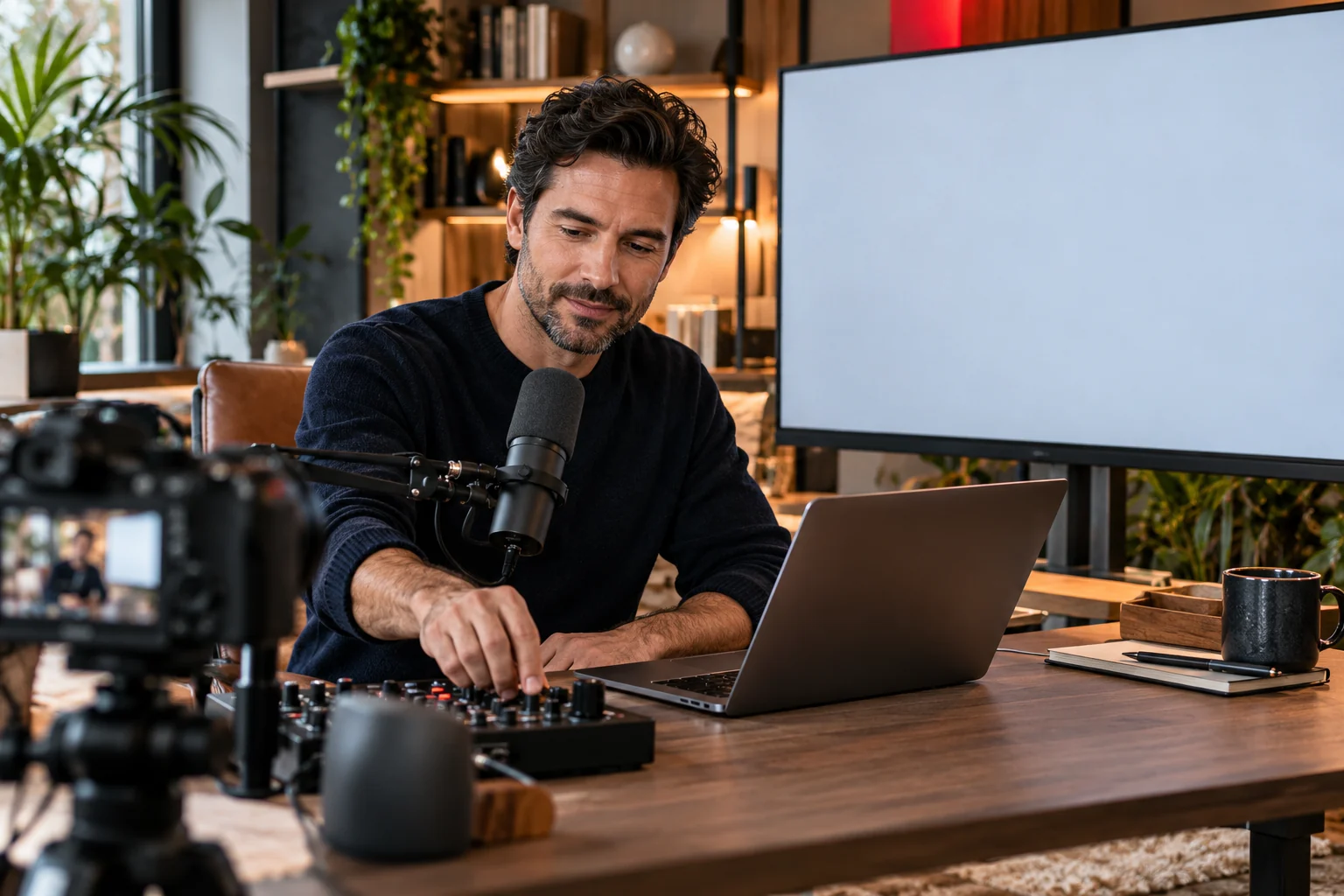
Strictly speaking, not a “skill”, but without sound technical infrastructure, the first three competences often lose their effect. After eighteen months, I for one am tired of looking at someone’s nose hair from the laptop camera’s perspective, let alone listening to often miserable sound quality.
Just as an excellent craftsperson uses proper tools, we may expect an excellent online facilitation craftsperson to work with appropriate technical infrastructure. At the very least, that means a decent camera, a good microphone and proper lighting. Anyone wanting to learn more and do this really well should watch Adrian Metzger’s YouTube channel.
Conclusion
We certainly cannot expect these four digital workshop competences from every online meeting or workshop participant. But, just as offline, we can at least expect them of a professional online facilitator.
We may be at least as demanding here as when judging our children’s education system’s digital competence.
Have a good start to the week, then, with hopefully efficient and effective online encounters.
Artikel teilen↗
What does this mean for your organisation?
Let’s explore your specific challenge together.
Let’s talk↗